Tuesday, September 20, 2016

Classical Music is a Round Peg

Everywhere you look, people in the classical music business are trying to find ways to make it appealing to 21st century people. Branding! Entrepreneurial training! More bums in seats! Popular programming! Take the music to the people (parking garages, pubs)! Re-branding! Social media! Naked opera! Diversity! Equality!

Whew! About all this is missing is climate change and LBGTQ.

All of these efforts, some successful, many not, have the result of distorting classical music into something it is not: a normal part of life in the 21st century. Face it, most people, even those who love music, see classical music as not being a comfortable fit with their lives. Concerts take too long and you have to be quiet and not be checking your phone. The performers dress in these old-fashioned costumes. The music doesn't seem relevant to The Way We Live Now. And what the heck is a "sonata" anyway?

Whenever we try to make classical music fit into today's scene, it is like trying to put a round peg in a square hole. You can try, but unless you do a lot of whittling, it ain't gonna work. So that's what is recommended: whittle off the bits that don't fit: out-dated concert garb, long programs, audience silence, special concert halls and most of all, that classical repertoire. If you whittle off enough, you get pretty close to the pop experience:


But you know what is truly great about classical music? It is not pop music and it doesn't fit very well into our contemporary monoculture. Classical music is like a fig in a bowl of fennel, a goat in amongst the sheep. It is valuable precisely because of what it is not: just another musical niche in with the hip hop and the alt-country and the indie folk. It is a voice from another world and, as such, it give us perspective on our world. It is like a whole series of time capsules from different times and peoples who thought and felt differently than we do. Now that's diversity! Our problem is that mass media, social media and all the rest of that technology that connects us, turns us into a giant echo chamber all reacting to the same things and thinking the same thoughts.

Classical music, like classical literature and art, is great because it is not another hue of popular culture. Just that is appealing and refreshing. But in addition to that, it also happens to be a wonderfully powerful aesthetic experience.

The clip I posted above, of ThePianoGuys doing a mashup of Mozart and Adele, should be contrasted with the original piece by Mozart, to see just how much was whittled away:


ThePianoGuys clip is lugubrious, sentimental and slightly vulgar. The Mozart original is, well, terrifying. Not the thing to put on something like an album of "The Most Relaxing Classical Music."

Monday, September 19, 2016

Pasta with Italian Sausage

I started to do the occasional post on food when I was vacationing in Madrid back in May. The food was just so wonderful that I had to tell you about it! Then, last month, I did a post on roasting a chicken with a new recipe I had discovered. So now I want to do another food post. This one is a recipe I have been making for a long, long time. It was originally inspired by a recipe from a book by Umberto Menghi, the Vancouver chef who had several Italian restaurants at one point. I really learned to cook Italian from his books. I am at the point where I almost never go to Italian restaurants because what I can do at home is better. So here is one of my most successful recipes. This is quite a simple recipe, but I have modified it considerably from the original.

Pasta with Italian Sausage


Ingredients:

One Italian sausage per person
One good-sized Roma tomato per person
Basil (I used dried, but use fresh, chopped up, if you have it)
Extra virgin olive oil
About a quarter pound of pasta per person, I like capelli, spaghettini, linguine or tagliatelle
salt
Sambal Oelek

Directions:

Put a large pot of water, with salt, on to boil for the pasta.
In a skillet or frypan, on medium-low, heat about a tablespoon of extra virgin olive oil per person.
Using the point of a knife, slit the casing of the Italian sausage and peel it off. Slice the sausage into rounds about a half-inch thick. Place these in the frying pan. After they have browned, turn them over. Sprinkle with the basil.
Slice the tomatoes in two lengthwise and remove the eye. Then slice each half into thin wedges. When the sausages have browned, add these to the pan. Salt to taste.
Finally, when the tomatoes are cooked (three or four minutes) add about a tablespoon of sambal oelek per person to the pan and mix together.
When the pasta is done, drain and add to the pan. Toss everything together and put on serving plates.
Grate real Parmesan cheese (from Italy!) over each serving.
Enjoy!

Pick a robust wine to stand up to the pronounced flavors of the dish. Maybe a good California or Australian Shiraz.

In the original he used ground chiles, but I don't like them much as you are always picking out little dried bits from your teeth. The sambal oelek works much better.

No photo because it wasn't until I had eaten half the plate that I decided to do a post. Here's a picture of the jar of sambal oelek:


Personally, I think that one of the biggest secrets to Italian cooking, and one that no Italian restaurant in my area seems aware of, is the need to use real Parmesan cheese for grating. It comes in those big 50 lb rounds and it's not cheap. But it is so, so worth it. That rubbery, tasteless stuff that comes in a box or can, pre-grated, is awful. And so is the cheese from Uruguay that is also labeled "Parmesan". Parmesan cheese comes from Parma. In Italy. And it has a unique and irreplaceable flavor.

Saturday, September 17, 2016

The Oldest Melody: 1400 BC?

The oldest written music we supposedly have is of a melody transcribed from a Hurrian tablet in cuneiform. Here is a link with more information:
The hymn was discovered on a clay tablet in Ugarit, now part of modern-day Syria, and is dedicated the Hurrians’ goddess of the orchards Nikkal.
The clay tablet text, which was discovered alongside around 30 other tablet fragments, specifies 9 lyre strings and the intervals between those strings – kind of like an ancient guitar tab.
But this is the only hymn that could be reconstructed – although the name of the composer is now lost.
Here is a translation of the associated text:
‘Once I have endeared the deity, she will love me in her heart,
the offer I bring may wholly cover my sin,
bringing sesame oil may work on my behalf in awe may I'
And here is a performance on lyre:


Because I have studied old notations (Paleography, a doctoral seminar in musicology) I know how rudimentary musical notation was before the invention of the staff and rhythmic values around 1000 AD. So I tend to listen to these "reconstructions" with a jaundiced ear. A remarkable number of the more ambitious ones end up sounding a lot like Carl Orff because he wrote music that he wanted to suggest ancient music. In other words, we are not hearing or reconstructing anything with any authenticity, we are mostly just projecting.

This rendition is a little bit different. Frankly it sounds (and looks) exactly like what someone might have improvised at Burning Man! Modal improvisation given a few rudimentary notes may have remained pretty much the same throughout human history. Thank god we invented something better!

Here is another realization of, I think, the same melody. This one is more ambitious and manages to sound like an introduction to Kashmir by Led Zeppelin:


Bear in mind that everything you hear, apart from the single notes, everything else, the rhythms, the drones, the arpeggios, is the complete invention of the performer (s).

Mind you, it does make you want to rub sesame oil all over yourself, doesn't it?

Friday, September 16, 2016

Music Marketing Photos

Every time I see one of those absurdly hyped up photos of the latest classical virtuoso I want to write silly captions. So here goes.

Yuja Wang:

Oh god, oh god, oh god--I am so glad I got this "very special" piano bench!


Lang Lang:

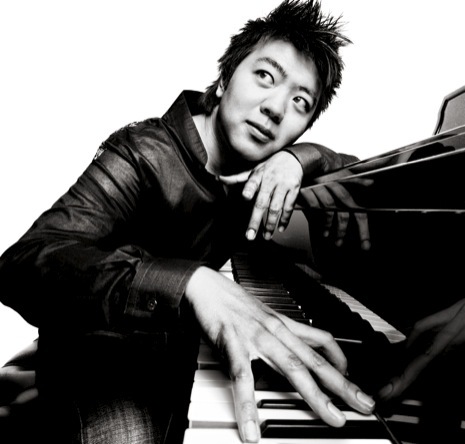
No, I'm not here to give you the prostate exam, why do you ask?

Vanessa Mae:

Uh, Vanessa? Please tell me that is not what you are going to wear onstage!


Khatia Buniatishvili:

And that's why I didn't get the "tramp-stamp" tattoo. You know, the one on the lower back?

Simon Rattle and Lang Lang:

Lang Lang, if you rush those sixteenths one more time I'm going to pistol whip you with this baton!
Milos Karadaglic:

Well, yes, I did spend the summer working as a lumberjack. How did you guess?

Bond:

What's wrong with wearing flower diadems? We think they look very nice!

The Piano Guys:

Look, can we change the key on this one? Because if I hit that low F, this piano is going right over the edge!
And that's that for that! Please, this was all in good fun and I didn't want to offend anyone.


Much...

What is Best in Life, Conan?

It seems as if one of the few places that wisdom might be passed along these days is in popular culture rather than the traditional institutions of schools, churches and government. Wait, perhaps the churches are still in the game--I would be the last to know! Now why do I say such an outrageous thing? It seems as if instead of young people being given the riches of Western Civilization, they are instead being taught to revile them. Every significant figure in Western history, if he is white and male as most of them are (and why is that?) is condemned because of being a significant figure in Western history and white and male. As we are told over and over, the history of the West is a history of oppression, racism and colonialism. Oddly enough, while there are those things in Western history, the history of every other region and culture on earth has much more oppression, racism and colonialism! But magically, through some strange operation of multiculturalism, none of that counts, only Western culture has failings.

In order for this spectacularly massive lie to be sold to the younger generations, they first had to be made nearly completely ignorant of history. That was surprisingly easy and just took a few protests on campus while chanting "Hey, Hey, Ho, Ho, Western Civ Has Got to Go!" Of course this was preceded by decades of Gramscian softening up.

The result is a vacuous progressive monoculture that dominates government, media and academia. It is pretty significant in popular culture too, but there are little cracks where the truth peeks through. Let me give you an example with a famous clip from the movie Conan the Barbarian (1982) where Arnold Schwarzenegger explains what is best in life:


Just in case the accent was deceiving, Conan says that what is best in life is "To crush your enemies -- See them driven before you, and to hear the lamentation of their women!" Sounds like fun! But there is actually an interesting point there. The question is "what is best in life" not what is most enjoyable or most pleasant in life and our tendency is to forget the difference. "Best" is a superlative deriving from "good", a normative term meaning what can or should be commended. It is not equivalent to the most pleasant or enjoyable. The truth of this is also in the film. Conan's most pleasant and enjoyable time is when he is reclining on fine furs, surrounded by bowls of precious stones, drinking wine and in the company of the very beautiful Valeria played by Sandahl Bergman. That doesn't end well, of course!! What is best in life is not to indulge in mere physical pleasure (I think Plato said something about that), but to be engaged, to be doing things, specifically, to be doing good things.

So if you ask me what I think is best in life, my answer is "To explore aesthetically strong and active music, to compose and play music, to write about music and to study through scores, recordings and books music of interest." Ok, it's a bit focussed, so sue me! One should add in a lot of other things like taking the opportunity to be kind, to spend time with friends and family and all sorts of other things that we commonly understand.

That idea, that I just put there, about "aesthetically active" is something that just occurred to me as I was listening to Grigory Sokolov the other day. What makes his performances so aesthetically energized? It is not that he plays faster or louder, it is that he activates the music in very profound ways. We hear all the different voices with great clarity, we hear the exact significant intensity of every harmony, we hear the acuity of the rhythm and we hear the notes and chords placed just where they should be aesthetically. And so on. Put into words, it is vague and fuzzy. But when you hear it done, it is perfectly clear and evident.


Friday Miscellanea

Let's kick off the miscellanea with a fling--a piano fling to be precise:


You don't see that every day. Wouldn't it have been even cooler if they had flung a 9' concert grand? I believe that the technology they are using is some version of the medieval trebuchet.

* * *

We seem to be in the Age of the Trivial. Ancient philosophers described history as a Golden Age, followed by some lesser ones. According to Wikipedia:
The term Golden Age (Greek: χρύσεον γένος chryseon genos) comes from Greek mythology and legend and refers to the first in a sequence of four or five (or more) Ages of Man, in which the Golden Age is first, followed in sequence, by the Silver, Bronze, Heroic, and then the present (Iron), which is a period of decline, sometimes followed by the Leaden Age. By definition, one is never in the Golden Age.

Yes, the Leaden Age is fast approaching. One of the signs is the unashamed triviality of contemporary art. As example, the Wall Street Journal tells us about British artist David Schrigley's monumental sculpture just unveiled in Central Park, New York:

Click to enlarge
Yes, that's a 17 foot tall granite sculpture of a, wait for it, grocery list. He really wanted to remember to pick up a few things and that's why the sculpture is titled "Memorial". Sigh. "Nuts" I say.

* * *

Revisiting the topic of a post from way back that is still #6 on the list of my most popular posts (in the right hand column), here is a New Yorker article about Yuja Wang and how a fashionable young woman piano virtuoso dresses: Yuja Wang and the Art of Performance. The accompanying photo just makes me want to write silly captions! Here is the opening paragraph:
What is one to think of the clothes the twenty-nine-year-old pianist Yuja Wang wears when she performs—extremely short and tight dresses that ride up as she plays, so that she has to tug at them when she has a free hand, or clinging backless gowns that give an impression of near-nakedness (accompanied in all cases by four-inch-high stiletto heels)? In 2011, Mark Swed, the music critic of the L.A. Times, referring to the short and tight orange dress Yuja wore when she played Rachmaninoff’s Third Piano Concerto at the Hollywood Bowl, wrote that “had there been any less of it, the Bowl might have been forced to restrict admission to any music lover under 18 not accompanied by an adult.” Two years later, the New Criterion critic Jay Nordlinger characterized the “shorter-than-short red dress, barely covering her rear,” that Yuja wore for a Carnegie Hall recital as “stripper-wear.” Never has the relationship between what we see at a concert and what we hear come under such perplexing scrutiny. Is the seeing part a distraction (Glenn Gould thought it was) or is it—can it be—a heightening of the musical experience?
Thankfully, after that teaser, we are treated to a very long and in-depth article that talks about the music, career, how she lives, how she grew up and so on. The New Yorker seems to sense that Yuja Wang is going to be one of the leading pianists of our time. And they might be right. I squirmed a little bit at the direct comparisons between her and Murray Perahia, who is forty years older.


* * *

Somehow I missed this when it came out. Eric Clapton's autobiography was published in 2007.
“I found a pattern in my behavior that had been repeating itself for years, decades even. Bad choices were my specialty, and if something honest and decent came along, I would shun it or run the other way.”
With striking intimacy and candor, Eric Clapton tells the story of his eventful and inspiring life in this poignant and honest autobiography. More than a rock star, he is an icon, a living embodiment of the history of rock music. Well known for his reserve in a profession marked by self-promotion, flamboyance, and spin, he now chronicles, for the first time, his remarkable personal and professional journeys.
* * *

The latest on the trials and tribulations of traveling musicians comes from The Strad. Vueling Airlines forced violinist José Manuel Jiménez García to transport his violin between his knees on a recent flight:


Back in the 70s I actually took a flight with Iberia with my entire guitar, in its case, jammed between my knees. The thing is that it is supposed to be unsafe to have luggage just casually propped here and there: that's why they have the overhead racks--to keep luggage from flying around in case of turbulence!!!


* * *

Here is a quite interesting interview with opera producer David McVicar. Worth reading the whole thing, but here is a sample:
Mozart is like Shakespeare. Mozart is like the world. Every Mozartean character is seen in 360 degrees. Not every Verdian character is. Some Verdi characters are quite flat. You need to flesh them out to find other dimensions. But even Barbarina in [The Marriage of] Figaro is completely rounded and completely convincing as a character. Because I’ve done a lot of Mozart, and I’ve done a lot of the same titles in different productions, and the wealth of detail you can explore and the new things you can discover each time you come back to a piece like Figaro and [Don] Giovanni — it’s remarkable.
Yes, indeed, Mozart is an artist on the level of Shakespeare and the problem with the reception of classical music in today's culture is that the public conception of Mozart is that he wrote that pretty piece Eine Kleine Nachtmusik and made Salieri look silly in that movie. Shakespeare gets much better press--must have a better agent!

* * *

 And for our envoi today what could be more appropriate than to watch and listen to a Mozart opera with those 3D characters? Here ya go, three hours of the best; just like Shakespeare except with music:


Credits:

Le Nozze Di Figaro (The Marriage Of Figaro)
Paris 1993 production
Figaro - Bryn Terfel
Il Conte d'Almaviva - Rodney Gilfry
Susanna - Alison Hagley
La Contessa d'Almaviva - Hillevi Martinpelto
Cherubino - Pamela Helen Stephen
Don Basilio/Don Curzio - Francis Egerton
Marcellina - Susan McCulloch
Dottor Bartolo - Carlos Feller
Antonio - Julian Clarkson
Barbarina - Constanze Backes
Music by: Wolfgang Amadeus Mozart
Libretto by: Lorenzo Da Ponte
Director - Olivier Mille
Conductor - John Eliot Gardiner

Thursday, September 15, 2016

Battle of the Hammerklaviers!

Reminds me of an old joke: the English Baroque Concert Society played Vivaldi last night, Vivaldi lost! Yes, there is always the feeling that music and out-and-out competition do not quite go together. But after reading the New Yorker article on Yuja Wang and how splendiferous her Hammerklavier Sonata is, I thought maybe it was time to do some side by side listening. After all, they end the article by asserting Ms Wang's "incomparable musicality." Well, maybe it is not so incomparable after all. Let's see.

The piece in question, one of the great thorny challenges of the piano repertoire, is the Sonata in B flat, op 106 by Beethoven. Here is the original title page:


Now "Hammer-Klavier" in German just means "keyboard with hammers" as opposed to the older harpsichord which is a keyboard with plectra. Beethoven went through a nationalist phase where he began to use German tempo words instead of Italian ones. "Pianoforte" is, of course, an Italian word that points to the ability of the keyboard with hammers instead of plectra to play both soft and loud. In any case, the word "Hammer-Klavier" does not signify that this piece is particularly loud or fierce. It is just a handy nickname like "Moonlight" Sonata or "The Tempest".

In order that the comparisons be fair, you should listen to these clips with the score and NOT watching the videos.

This is quite a long sonata, between forty and fifty minutes depending, so I will just talk about the first movement. I have listened to two performances of the the first movement by each performer. Let's listen first to Yuja Wang at the Verbier Festival this year:


The first movement is about nine minutes long in this performance. Next is the performance at Carnegie Hall this year and the first movement is a little over eleven minutes long:


Then we have Grigory Sokolov in a performance at Munich in 1975. He also takes around eleven minutes for the first movement:


The final one I listened to is on this CD: Sokolov: Schubert/Beethoven and it is the longest of all; the first movement takes almost fourteen minutes. For some inexplicable reason, Blogger won't embed the clip, so just follow the link:


Trust me, it is worth it. This last clip, recorded in a concert in Salzburg in 2013, was just put up on Aug. 23 and so far has had only five views! It has been released on this CD, which I recommend (for the Schubert even more than the Beethoven):


What I would like to do at this point is nothing. I have taken away Yuja Wang's huge publicity advantage and just posted two of her performances followed by two of Grigory Sokolov's and all you have to do is listen to them. Preferably watching the score, not the video! Then you can simply come to your own conclusions! But I am happy to offer a couple of thoughts. It is actually very hard to put one's reactions into words. Often one musician will run into another coming out of a concert and one will simply shake their head while the other returns that with a smile. Yes, we both know what we think and no need to put it into words.

It is hard to put into words because, while I think it is quite clear who is the better performer of this sonata, exactly why is not so accessible in language. For example, while what Yuja Wang does is certainly very accomplished and quite correct: notes in the right places, dynamics tidily done, phrases phrased and so on, it never seems to amount to much. Whereas, Sokolov, even in the early performance which is full of fire and rhythm, always seems to be revealing something: inner voices, that bass line you never noticed, the whole of that odd harmony. And he is always with where the harmony is going. The last performance, the slowest of all, is also the finest. Things that don't make a lot of sense when they are rushed become clear and inevitable at the slower tempo. And yes, there is some controversy about Beethoven's tempo markings. 

But really, were you expecting anything else? Really? As a very seasoned Czech violinist said to me as we ran into one another leaving a concert by a young Canadian cellist, "what, you were expecting Rostropovich, maybe?"

Nope.