I try to stick very closely to music in this blog, with occasional excursions into pop culture and philosophy. But let me depart for just a moment. Fifteen years ago I moved from Canada to Mexico, which some people might think a crazy idea. Mind you, there are eight or ten thousand other expatriates who live in the same town as I do, San Miguel de Allende in the state of Guanajuato.
Turns out that San Miguel has a very active cultural life. Right now and for the next two weeks is an excellent chamber music festival featuring international stars. I'm very much looking forward to Friday's concert by the Gryphon Trio when they will be playing one of my favorite chamber works, theTrio No. 2 in E minor, Op. 67 by Shostakovich. But that's not why I'm putting up this post! I would like to steal a page from Ann Althouse and put up a photo I just took out my kitchen window:
Hibiscus flowers don't last very long, but there are always new ones coming along. This hibiscus is a small tree, about fifteen feet high.
I ran across a pretty scathing comment on what passes for journalistic wisdom the other day. Here is a good excerpt:
The rise of new publications like IBT [International Business Times] illustrates the reality that the public still wants and needs news. Indeed, the global hunger for real news, useful filters and helpful analysis is growing. What isn’t growing is the desire to read the bloviating, self-indulgent prose of dozens of highly paid, self-important windbags who tweak the conventional wisdom week after week under the illusion that they are making some kind of contribution to public life.
This is from the pretty interesting blog Via Meadia. An awful lot of music journalism is similar to this, though I would rather describe it as know-nothing commentary masquerading as all-knowing. Wired provides us with some good examples. Here is how one piece of music is described:
“Stick Freighter” starts out with that cheesy, fruity muzak repetitive funk strut, and then tosses in the burbling video game effects from before there were video games — the corny feel good crescendos counterpointed with anticlimactic cutesy spits, followed by an incongruous, fiery rock solo.
I'm dying to know, was it cheesy or fruity? And what is the exact difference? Something to do with the rhythmic articulations, maybe? What did burbling video game effects sound like before there were video games? Was it banjos? How is a corny feel good crescendo different from a non-corny feel good crescendo? My favorite bit is where he uses the musical technical term "counterpoint", but as a metaphor in a paragraph attempting to describe music! And I don't think I even want to know what an anticlimactic cutesy spit is...
The writer seems to actually believe he said something, but all I see here is meaningless word diarrhea. Take the sequence "cheesy, fruity muzak repetitive funk strut". Jamming all those words together may look like it has meaning, but any actual significance is wiped out by the conflicting senses of the words. I know what muzak is and possibly what funk is, but putting them together just makes no sense. And that is just two out of the six words strung together.
Kinda makes you long for "bloviating, self-indulgent prose" doesn't it?
Psy isn’t the first YouTube star (and it’s worth noting he was massive in his home country before Americans discovered him) but he’s emblematic of how completely things have changed. And while sure, there’s some marketing weasel in Los Angeles right now trying to figure out how to emulate Psy’s success, the future of music distribution is you. That future has been a long time coming. But one look at Gangnam’s numbers, and it’s massively evident that it is here.
Yes, and Valentina Lisitsa is a classical YouTube star as well. But I had just about managed to have "Gangnam Style" fade from my consciousness when the article reminds me of it again. Musically, the nearest equivalent to "Gangnam Style" might be the 1966 novelty song "I Love Onions" by Susan Christie.
And wow, that one sure changed music forever, didn't it?
Prompted by some comments on one of my Beethoven posts I think it might be useful to talk about these mysterious things: keys, modes and scales.
To get the obvious out of the way: "keys" are those regions that are defined by "common practice" tonality. But what does that mean? Not so terribly easy to explain. Here, have a look at the Wikipedia article. They have difficulty defining the meaning of "key" as well.
"Key" is a fundamental concept in traditional harmony. In order to write a piece of music, the first thing you have to do is decide what key it will be in. You also have to decide what time signature, tempo and instruments you are going to use. Maybe pick a title. But all these are secondary to deciding on the key. Here is a bare bones piece in C major:
Here is the "same" piece in a different key, E flat major:
I just used the music software's transposition utility to move the music up a minor third, putting it into E flat. The "key" of a piece of music in traditional harmony is the name of the tonic, the "home base", where the music begins and ends. It is defined harmonically with a perfect authentic cadence, as in both the examples. A C major or E flat major triad on its own does not define anything. To create the sense of a key, you need a cadence. A lot of so-called "tonal" music written nowadays does not have cadences so is only loosely tonal. In the Baroque and Classical periods, every piece and every significant section of every piece HAD to end with a perfect authentic cadence. The only exceptions are the "church keys" found in 17th and some 18th century music where the key signature appears to be missing an accidental and where the composition appears to end not on the tonic, but the dominant. There are lots of examples in Corelli and there is even a Bach prelude in D minor that ends on an A major chord. The reason for this is that this is a holdover from the older modal system. As soon as tonal harmony fully established itself in the first half of the 18th century, these anomalies disappeared.
There are twelve major and twelve minor keys. Ah yes, there are two kinds of keys: major, as shown above, and minor, which share the same key signature but start in a different place. Here is the key of A minor, which has the same key signature as C major, no sharps or flats:
What is that sharp doing there? The problem with minor keys is that they don't have a leading tone, so we have to insert one. The leading tone is the note one semitone below the tonic which leads to the tonic: B leads to C and G# leads to A. G natural is a whole tone below and does not lead to A. The major and minor keys are a very useful relic from the modal system as they derive, respectively, from the Ionian and Aeolian modes.
So that is a rough and ready introduction to the idea of "key". And I've also slipped in the idea of "mode". There is a Wikipedia article on modes as well. Modes have a very long and obscure history that goes right back to the ancient Greeks. They had different kinds of musical structures that they named after different tribes (Dorians) and regions (Lydia). In order to talk about modes and, indeed, to complete the notion of key, I'm going to have to talk about scales.
If you go back and look at my little example in C major, you will discover that it uses all the notes from C to D: C D E F G A B C. This sequence of notes, placed in order, is called a "scale". To write in C major, you use the C scale and to write in E flat major, you use the E flat scale. These are major scales and they all have the same interval structure: tone, tone, semitone, tone, tone, tone, semitone. There are also minor scales that are different because they have a different interval structure. The minor scale is all those notes from A to A: A B C D E F G A. The structure is tone, semitone, tone, tone, semitone, tone, tone. But we can't use exactly this structure because of the lack of a leading tone, so we always have to raise the G to G# in a cadence. The rules about when to raise the leading tone (and sometimes the note before, the F, as well) are complex.
What complicates things even further is that the Greek modes fell completely out of use. In the middle ages, when the monks were developing chant, they also developed a set of modes and they used the Greek names. But the so-called "church modes" have nothing musically to do with the Greek modes, they just use the same names. See the Wikipedia article for more confusing details! The church modes, which include the Ionian and Aeolian, source of our major and minor scales, also include several other kinds of interval structures. Here are the eight church modes with their modern names:
Click to enlarge
That little "f" indicates the finalis or note to end on. The modes on the second line, with the prefix "hypo" all end on a middle, not bottom, note. To take just one example, the Dorian mode shares qualities of both the major and minor scales. There is a minor third above the "tonic" so it sounds minor, but the sixth note of the scale is a major, not minor sixth. So it sounds a bit major as well. The Phrygian mode sounds most unusual because it has a leading tone from above--F to E--instead of from below. A lot of the harmonic color of Spanish music comes from using the Phrygian mode.
One way of looking at the relationship between key, mode and scale is to see key and mode as the theoretical structures behind the music, while the scales are what you hear used in the music.
Before leaving this complicated and confusing subject, I should mention that there are scales that lie outside the whole key and modal systems. For example, one scale that was used quite a bit by Debussy is the whole-tone scale, so-called because it consists only of whole tones. No cadences are possible because there are no leading tones. Also, all the chords are augmented chords. Here is what that scale looks like:
Debussy used this in a prelude for piano called "Voiles" that I talked about here.
But there are other scales as well. Russian music often uses the octatonic scale which has eight notes. They are typically organized alternating tones and semitones like this:
But this does not exhaust the possibilities as there are many other possible scales (or modes). Russian theorists have postulated quite a few interesting modes to describe the music of Shostakovich and based them on traditional Russian concepts of mode. As an example here is what the theorist Alexander Naumovich Dolzhansky calls an "Aeolian double-lowered melodic" mode:
And there are a whole bunch of others!
I think that I will stop here before things get any more complicated. Let's end with a piece of music that Dolzhansky used to illustrate his theories of mode in Shostakovich: the Sonata No. 2 in B minor, op. 61. Here are the first two movements played by Valentina Lisitsa:
I usually don't do reviews of concerts because it is not terribly interesting as a rule. I saw a concert last night that sparks some thoughts, though. The concert was part of our chamber music festival for which I write program notes. So I know the music going in. Following will be my reflections on the concert given last night by the Daedalus Quartet.
First of all, why is it that biographies of classical musicians these days strive to be as uninformative as possible? After reading a typical one, such as the one on the Daedalus Quartet website, about all you know is that they have received some good reviews and played a lot of places. Sometimes we hear about competitions they have won or recordings they have made. But there is nothing about who these musicians are, where they were born, where they grew up, who they studied with and where, and what performing traditions they might be part of. They are mere anonymous international music workers. With deductive close-reading one concludes that they are a New York based quartet who have spent a lot of time as quartet in residence at the University of Pennsylvania. Way back in 2007 the New York Times gave them a pretty good review. Let me quote one paragraph from that review:
Beethoven’s String Quartet in A minor (Op. 132) got off to a promising start; the musicians embraced the episodic strangeness of the opening movement and frolicked in the rustic bagpipe impressions of the second. The famous “Heiliger Dankgesang” hymn of the central movement initially seemed too chaste, but grew to an impressive intensity by the end. Ebullient renditions of the two final movements were occasionally blemished by shaky intonation; still, over all this was a respectable account.
Last night's concert contained three works: a very, very early quartet by Joseph Haydn, the op 1 no 3 in D major, the Quartet No 1, also in D major, op 25, by Benjamin Britten and the main reason I attended, the late Quartet in E flat, op 127 by Beethoven.
The Haydn was a charming piece given a light and charming performance. One thing that particularly struck me was the tone color the quartet produced: it had a real 18th century flavor. Excellent performance of a diverting piece. The Britten was also quite impressive. They found an entirely different tone color for it, more intense and crystalline. The ensemble was excellent and they played with real conviction. So I was quite looking forward to the Beethoven. Alas, the whole performance seemed to go astray. The too-light playing of the cellist became more and more a problem. The interpretation sounded as if they were playing Mendelssohn instead of Beethoven. Everything was fussy and they never seemed to find either sufficient punch or a solid rhythmic foundation. By "fussy" I mean that every phrase was shaped too much, the dynamics swooped in and out too much and too frequently. Those powerful little motifs that Beethoven uses to tie everything together always seemed to have the wrong emPHAsis. They seemed to abhor accented and shortened notes, wanting everything to be smooth and legato.
I imagine the NYT reviewer heard much the same as I did, but was reluctant to do more than hint at it. The Daedalus Quartet, excellent musicians, seem to have a real problem with Beethoven. They just don't seem to 'get' him. There is always a bit of the wild man in Beethoven and Daedalus are too genteel with him.
Here is a clip of the Daedalus Quartet playing a movement from Haydn's op 1 no 2:
I don't know if this is indicative of anything, but there seems to be no clip on YouTube of the Daedalus Quartet playing Beethoven. Here they are playing the Quartettsatz by Schubert:
And here is the first movement of the Beethoven Quartet in E flat, op 127 played by the Quartetto Italiano, for comparison:
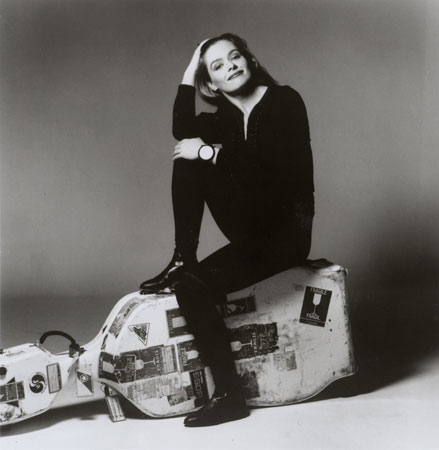
They are, you know. After all those serious Beethoven posts, I feel the need to do quite a different kind of post. Here is exhibit one in my argument that cellists are always beautiful, even fictional ones. Here is Virginia Madsen in the role of Madeline Robistat in the movie Electric Dreams from 1984:
Well yes, musically there is a bit of a problem because they turned a little minuet by Bach from the Anna Magdalena book into 4/4 so they could get down and funky with it. But could you even find a more beautiful cellist? Let's try.
Here are a couple of Canadian cellists:
Shauna Rolston
Ofra Harnoy
Here is Teodora Miteva from Bulgaria:
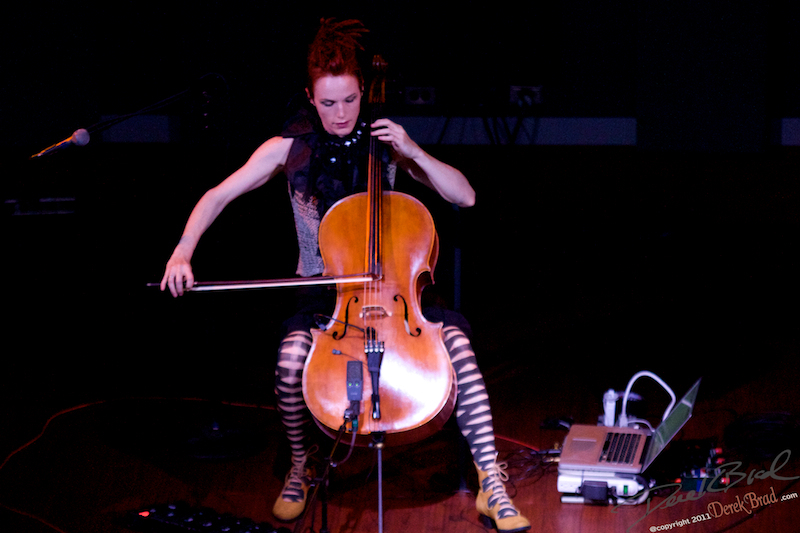
Zoe Keating has more of a punk look:
British cellist Natalie Clein:
Anonymous cellist playing on the street in Florence, from a fashion blog:
Olivia Culpo, cellist, is perhaps better known as Miss Universe 2012:
It that doesn't convince you, nothing will...
UPDATE: Next up, so no-one can accuse me of favoritism: ruggedly handsome guitarists like Narciso Yepes:
I have been taking my time putting up this final post on the Beethoven symphonies because the last movement of the 9th poses unique problems. There are two conflicting ways to look at this movement: either it is one of the greatest works of musical art ever created, so universally admired that they play it every New Year's in Japan and it has also been selected as the "national anthem" of the European Union; or it is a dog's breakfast of a piece, cobbled together out of elements that do not fit together and saddled with vocal parts that are badly written and almost unsingable. I'm afraid that both of these perspectives are probably true!
Lest you think that my misgivings about the last movement of the symphony are some kind of eccentric perversity, let me quote a couple of opinions from others. Louis Spohr who had known Beethoven personally and even played in his orchestra thought the last movement was "monstrous and tasteless". Fanny Mendelssohn thought the last movement was "abominable" and fell into "burlesque". Even a young Schubert thought that it confused "the agreeable with the repulsive, heroism with howlings". All these quotes are from a brilliant essay by Richard Taruskin on the 9th called "Resisting the Ninth" that was published in the Spring 1989 issue of 19th-Century Music. By the way, this extraordinary article, under the guise of being a review of Roger Norrington's new recording (at the time), is probably the most interesting and challenging piece of writing on the symphony. Modern critics of the symphony include Thomas Mann and Ned Rorem.
Now, let's have a look at the music. Let me hasten to say that I am just going to mention a few elements--this is a blog post after all!--and make no attempt to analyze the movement. I recommend Taruskin's article, available upon registration (free) through JSTOR, which does a pretty thorough job and also has a list of recommended reading and listening.
The two most radical departures from classical tradition in this movement are first of all, that it is virtually a symphony in itself with different sections in different tempi that recapitulate the previous movements of the symphony. Secondly, the introduction of vocal soloists and choir turns the work into something unprecedented: this symphony, in order to have a finale grand enough for the work, turns it into a kind of oratorio or cantata!
The movement begins with a cacophony in the winds:
Click to enlarge
Followed by a recitative in the contrabasses:
Then the recitative is interspersed with quotations from the previous movements. The big theme is prefigured in the basses--here is just the beginning:
Finally, finally the baritone enters with this plea to stop all this cacophony "Oh friends, no more of these notes":
And then states the main theme himself. Again, here is just the beginning:
He is joined by the choir:
Later on there is a Turkish March:
Click to enlarge
A couple of fugues:
Click to enlarge
And passages of sublime transcendence:
Click to enlarge
Beethoven is anticipating the 19th century with a message of universal brotherhood. Unfortunately, in the view of many, this vision was thoroughly burned by dictators and commissars in the early 20th century. Beethoven's encoding of the brotherhood of man transcending worldly concerns, while powerful, has to also be seen as naive--tragically so.
There are also musical problems in performing the piece, many of which Taruskin and others have written about. Not the least of these are the problematic metronome marks that Beethoven provided. I'm not sure that anyone has fully resolved those issues! Still another is the writing for voice. Preparing for this discussion, I put up a post the other day talking about Beethoven's writing for voice. He was, above all, a superb composer for instruments and it is his instrumental music that typically wins us over. His vocal writing is another story! The choral writing in this last movement is workable, but the parts for the vocal soloists are difficult, awkward and to me, fall short of what one would hope for. Don't take my word for it, let's ask a composer famous above all for writing for the voice, Giuseppe Verdi who said of the symphony that it was:
...marvelous in its first three movements, very badly set in the last. No one will ever surpass the sublimity of the first movement, but it will be an easy task to write as badly for voices as is done in the last movement.
Now let's hear the last movement. It would be appropriate to listen to Norrington's 1989 recording which comes in three parts on YouTube:
I cannot seem to find the last part of the Norrington performance, so here is the last movement conducted by Daniel Barenboim:
But for all the problems, it is also true that the 9th Symphony and especially the last movement also deserves all the praise it has received over the years. It is a movement like none other, spectacular in ways no other music has ever succeeded in being. The inspiration of generations of composers from Berlioz to Wagner to Mahler to Shostakovich. However much we may resist it, there is no other music like the 9th...
Way back when I had graduated from McGill and had just arrived back home in British Columbia, I was riding the ferry from Vancouver to Victoria and started having the strangest feelings of deja vu. I kept catching glimpses of people I recognized, but couldn't quite place. Then finally I ran into someone I knew fairly well, a fellow McGill student. Talking to her, I found out what was going on. It was the National Youth Orchestra traveling on the ferry for the next concert in their annual tour. A hefty percentage of them were, of course, from McGill, probably the finest music school in Canada.
The Globe and Mail, as Canada's national newspaper, occasionally hits the nail right on the head. Here is their review this week of the National Youth Orchestra that captures what is so great about this tradition.
Here is an excerpt from the Globe's review of the NYO's Toronto concert:
One of the anomalies of the “dying” art of classical music is that every year, music schools the world over graduate thousands of classical players, people in their teens and 20s who missed all the articles about the demise of the classics, and find themselves drawn to the delights and mysteries of this unique art.
Yep, that's true enough. I still worry that all these brilliant young musicians are going to find it very, very hard to reach an audience. Just to hear how good these young musicians are, here is the second movement, the Allegretto scherzando from Bartók's Concerto for Orchestra in a performance from last year's tour.
If you have the evening free, tonight they are playing in Ottawa. Here is the schedule for the rest of the month.