Showing posts with label music and politics. Show all posts

Sunday, March 16, 2025

Granted...

Music and politics are uncomfortable bedfellows no matter what your political or aesthetic theories are. But here is one writer that takes the bull by the horns: Strings attached: How politics corrupts classical music. The author is Austrian composer Rina Furano. Here is an excerpt:

For most conventionally successful classical artists, ensembles and concert halls, scrambling for subsidies is a daily reality. But before any youngsters start dreaming about state-funded stipends, let it be said that there is a major pitfall to this practice, which everyone in the industry knows, but nobody likes to talk about in public: Musicians who rely on politics for their daily bread effectively sign up for serfdom to the politicians controlling the grants — both artistically and personally. After all, he who pays the piper calls the tune. 

In my native Vienna, classical music’s supposed capital, this is euphemistically known as Freunderlwirtschaft  — roughly: murky business with friends, or less charmingly: cronyism. To see local and national politicians invited to, and courted at, events and fairs for composers is the norm, not the exception. The director of Vienna’s largest music university, MDW, even went so far as to open the Austrian Composers Association’s annual meetup a few years ago with the words: “It is our first and foremost duty as creators of music to spread a political message.” I was struck with disbelief; truculently, I had always thought the first and foremost duty as a creator of music was — to create music. The director, meanwhile, proceeded to go into detail about what the current political message was supposed to be, much to the contentment of the politicians dappling the audience. Vienna is not an isolated case by any means; indeed one would struggle to find any territory in Central or Western Europe where things are different.

I have just been reading some essays by Richard Taruskin bemoaning the aesthetic pitfall that high art classical music fell into of the myth of aesthetic autonomy, so reading this is a bit jarring. It is as if everyone read Taruskin and decided, no, we are going to be very socially engaged and as a reward, we will get lots of government stipends. I don't think that this is what he intended.

Read the whole essay for the author's solution, basically, cultivate private donors and try to do something musically worthwhile. Ah, ok!

About the only thing I am comfortable with these days is music as an entirely private pursuit. At least there are no aesthetic, economic or ideological problems.

The Symphony no, 15 by Shostakovich would seem as good an envoi as any. Bernard Haitink conducting.

Those were the days, when the worst thing Shostakovich had to worry about was Stalin.

Wednesday, April 19, 2023

The Refuge of Music

I mentioned that Richard Taruskin's main battlegrounds were ones that, in some cases, are no longer critically important. One of them was insisting on the social and cultural context of music against those who, like Schopenhauer, believe that music exists in its own separate world:

The inexpressible depth of all music, by virtue of which it floats past us as a paradise quite familiar and yet eternally remote, and is so easy to understand and yet so inexplicable, is due to the fact that it reproduces all the emotions of our innermost being, but entirely without reality and remote from its pain.

Taruskin spent much of his career railing against those who would want to insulate music from the world because he believed that in so doing, they simply made music irrelevant. There is a great deal of truth in this, of course, and we can be gratified that he largely won that battle.

But.

But.

When I sit down to compose, I do go off into another world, one without the distractions of this one. I close my ears to the sounds of construction next door, the barking of a neighborhood dog, the distant strains of a car radio and so on. I close my ears to these and other distractions because they are not relevant to my task which is to open myself to musical ideas that may float past (where do these come from?) and try to follow where they lead. It is as if I am, intentionally, insulating myself from the everyday world. This is pretty much how every composer works. Now this is while I am acting as a creator, a producer, where Taruskin is talking more about music as it is received by the listener who may be much more engaged with it in a social and cultural context. But even for a lot of listeners, while they may be aware and inspired by the context of the music as much as its abstract content, they may also choose to listen to music as a refuge from, yes, exactly that everyday world of politics and confusion.

Taruskin mentions that in the Symphony No. 5 of Beethoven he chooses instruments, kettledrums, piccolo, trombones, that have military associations. This is nothing new, Haydn also has military references in some symphonies, but it is an undeniable bit of referentiality. But if we choose to listen to a string quartet or a piano sonata, there is not necessarily the same kind of contextualism. Well, you could argue for it, I suppose, but I'm pretty sure that most listeners are immersed in the music qua music and not in terms of whatever external things might be referenced.


Wednesday, March 9, 2022

Cancelling Russia

I just saw this headline: Cardiff Philharmonic removes Tchaikovsky from programme in light of Russian invasion of Ukraine and my initial thought was, no, that's a bridge too far. Tchaikovsky didn't invade anyone so why should he get cancelled? They felt that while Russia was invading Ukraine was an "inappropriate" time to be doing an all-Tchaikovsky program. While it makes sense to punish the current regime in Russia for its cruel adventurism through economic sanctions, shutting down internet services, boycotting Russian oil and gas and a host of other measures, I really fail to see how eliminating Tchaikovsky from a symphony program serves any practical end. Do we hate Russian culture? Certainly not, so maybe it would be a good idea to perform more Russian and Ukrainian music to show that. Cancelling Tchaikovsky is just a particularly pointless example of virtue-signalling. But yes, do everything feasible to discourage the current leadership in Russian from continuing on this very dangerous path.


Sunday, November 28, 2021

Art Workers

For much of his life Shostakovich kept a daily schedule of his activities which can be very useful in establishing biographical details. Shostakovich Studies 2 contains a fascinating essay on this by Ol'ga Dombrovskaya: "Notes on Shostakovich's Diary." In connection with entries on his work with film director Leonid Zakharovich Trauberg, Dombrovskaya quotes from a resolution of the All-Union Communist Party Central Committee on "art workers."

Art workers should understand that those who continue to have an irresponsible and frivolous attitude towards their work could well find themselves off-limits with respect to progressive Soviet art and be out of the picture. [op. cit. p 46]

This is from the entry for Sept. 21, 1946. Shostakovich was already familiar with what this could mean as he was made persona non grata in 1936 after Stalin, Molotov and others attended a performance of his opera Lady Macbeth and were not amused. He would experience another banning of his work in 1948. Of course "out of the picture" in the Soviet Union under Stalin could mean something rather more serious than simply having your music banned--you could be sent to a work camp or simply shot in the head.

Something I was not aware of was that Shostakovich was a fairly important film composer, having written music for eighteen films beginning in the late 1920s.

Here is music from the 1929 film New Babylon:


Friday, February 12, 2021

Europe called...

Perhaps the most interesting passage in that Guardian article about Caroline Shaw was this one:

Being open to so many influences hasn’t always been straightforward. One of the vocal techniques referenced in Partita was Inuit throat-singing, which Roomful of Teeth studied with two representatives of the tradition. In autumn 2019, another Inuit singer, Tanya Tagaq, claimed on Twitter that Partita was a work of appropriation. Shaw was devastated.

“I stopped any performances of Partita at that moment. We had to figure this out. I fully respect what was said. Then a few months later Covid hit, so we haven’t performed it at all since then.” How does she see Partita working in the future? “I’m going to change the section that I never would have written had the conversation been different 10 years ago.”

There are a number of interesting elements here. Let's take the last one first. She says “I’m going to change the section that I never would have written had the conversation been different 10 years ago.” This raises the interesting question of whether any piece of music--or artwork generally--can endure over time? As they are always finding new things that are no longer permitted, then that raises the possibility that any artwork can become, even over ten years, objectionable in whole or in part. Ten years ago it was "cool" to study Inuit throat-singing and, as a kind of tribute, incorporate it into your work. Now it is "cultural appropriation" and therefore forbidden. That is like a sword of Damocles hanging over any creative artists work. Who knows what new thing will be forbidden ten years from now?

But let's look at this idea of cultural appropriation more broadly. It seems the strangest pole to hang your flag from because all music, and art, undergoes transmutation and "appropriation" in the course of history. One artist even said once that composers don't borrow, they steal. Yes, and if they do it well, it may result in better music than the model. Just look at what Bach did with Vivaldi concertos. If Inuit throat-singers really want to take back throat-singing so that it is a technique only they can use, ok.

But Europe called and wants its harmonic system back along with equal temperament, the violin, cello, piano, guitar and most other instruments. You can keep cymbals as they come from Turkey and the marimba and xylophone as they come from Java. Everything else, including the five-line staff, is cultural appropriation!

Yep.

Thursday, November 5, 2020

Baltimore American Musicological Society Conference

I have to give a trigger warning up front. Though we try to avoid politics in every respect except as it directly affects the music business and musicians, I am going to just wander into politics a bit in this post. I offer as an excuse that, as a Canadian, I do have quite a different perspective on American politics. Someone left a note on my desk yesterday about how every American, distraught over the election, will be alloted a "Canadian Emotional Support" person and I guess, in our office, that would be me! I have to say that Canadian election campaigns are much shorter, typically six weeks or so, and less emotionally fraught. I suspect that part of the reason is that we simply refuse to discuss the more difficult issues.

But let me back up a bit. Way back in 1996 or 97 I went to the American Musicological Society annual conference which that year was held in Baltimore. The high point for me was almost meeting Richard Taruskin who had a debate with my then-thesis advisor over neo-classicism and its connections with fascism. I don't even remember which sides they were on. Traveling to Baltimore and spending some time just wandering around the city was an unusual experience for me. I was not used to American cities as, apart from Toronto, they are quite different from Canadian cities. How is that you ask?

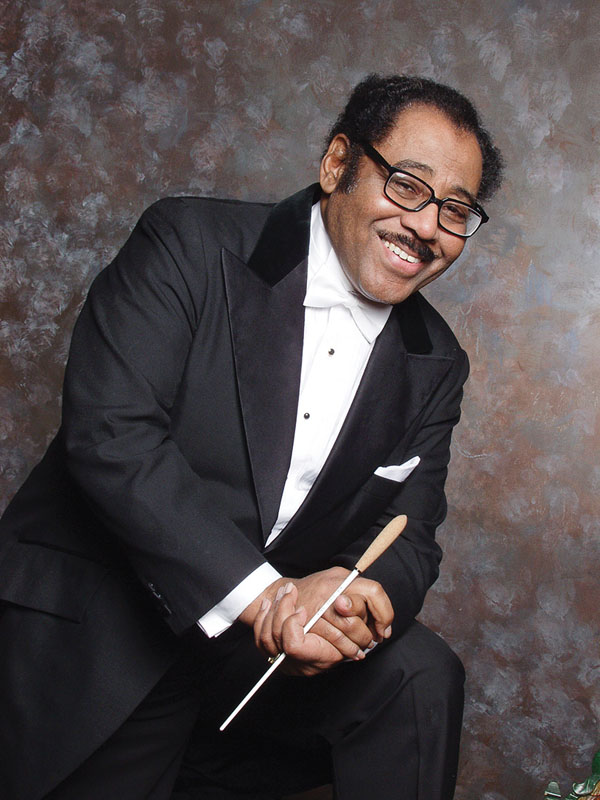
Let me offer up two bits of anecdotal evidence. I lived for quite a while in Victoria, the capital of British Columbia, and while I was there as an undergraduate music student, I used to usher at symphony concerts occasionally. The conductor of the orchestra then was Paul Freeman:


He is an American, born in Richmond, Virginia, and obviously black. As is his wife. I remember some of us ushers greeting his wife, who was usually sitting in row seven, saying "hi Mrs. Freeman." We had not been introduced, so how did we know that this black lady in row seven was Mrs. Freeman? Easy, in that whole 2,000 seat symphony hall there were precisely two (2), black people. The conductor and his wife. Back then many conductors in Canada, as with university professors, were imported from other countries. Not just the US, the previous conductor in Victoria was Lazlo Gati, from Hungary. I think we are finally hiring Canadian conductors now. I should mention, by way of context, that in the whole city there were probably fewer than ten black people. Victoria does have a very large population of people of Asian descent however.

Ok, back to Baltimore. At the conference there were about five hundred musicologists and graduate students in musicology from all over North American. In that whole herd there was one (1) black person, a young man in his thirties. I don't recall his specialty. As I wandered around the city I noticed something else odd: in every service job, all the employees, or nearly all, were black. The people behind the counter at the hotels, the people serving in restaurants and so on. Everywhere you went.

Now I draw no conclusions from this as I am an outsider and don't quite know what to think. In Canada, especially Quebec where I lived for over a decade, we have politicized language instead of skin color and with problematic results.

I will say this: there seem to be some profound problems in some cities in the US such as Baltimore, Detroit, and recently Portland OR, Seattle, and San Francisco. Mind you, I claim no Canadian superiority. Both Montreal and Vancouver have profound problems as well. Montreal, though few Canadians know about it and even fewer will admit it, has serious problems with corruption and the Mafia.

All I will say is that it might be time to try some new approaches to some old problems.

Some music? This is Paul Freeman conducting the Philharmonia Orchestra with Derek Han soloist in the Mozart Piano Concerto No. 21 in C major:


Saturday, September 26, 2020

Individuality

Our individuality is our most precious resource, and it is probably the one most threatened by the world of high technology we now live in. One of the keenest threats to our individuality however is the steamroller of identity politics because what it steamrollers over is the individuality, not only of the ones who are attacked, white people and males in particular, but especially the ones for whom the attack is ostensibly launched. The identity of black people is erased just as thoroughly as that of white people. And behind it all are always those shadowy manipulators who are the ones who are the real beneficiaries because what you get when you erase individual identity in favor of easily manipulated cohorts is power. 

Power.

I could go on at great length about how the relentless promotion of mass transit enables the few to tell the many where and when they can go, about how the minute regulation of every aspect of life again enables the few to tell the many what they can and cannot do, about how the draining off of every possible fee and tax and fine again enables the few to restrict the many from being independent of the state, but that would be to wander outside the margins of this blog, so I will not.

But I will point out that it is the individuality that we treasure in the great composers, who are not some herd of white supremacists who can be replaced by fiat with a different herd of diverse composers of color. In both cases it is the individuality that is simply dismissed because the group identity is the generic identity. We listen to Mozart because he is an individual, different from Salieri. We listen to Beethoven because he is an individual, different from Hummel. We listen to Stravinsky because he is an individual different from Anatol Liadov.

The problem with music theory is that it tends to always look for the Universal, the Ideal, the General and to discount the unique and individual as some sort of quirk. So in defining and describing "sonata form" the theorist looks for what is general and generic to all sonata forms, missing the fact that when he has so perfectly defined this form, he will discover to his dismay that none of the movements in sonata form written by Haydn actually fit his model!

Every great work of music is undefinable in the sense that it has an irreducible individuality. The generic form or genre is merely a kind of container or organization within which the individuality flourishes. If all you see is the generic bones, you miss not only the flesh, but the actual soul. This is the problem with music theory in general (quite useful as long as we recognize the limitations) and that of Schenker in particular--Schenker who reduced entire movements to the movement from 3 to 2 to 1 scale degrees.

For an envoi, here is one of Stravinsky's most individual and quirky pieces, Les Noces, based on Russian peasant folk traditions and melodies but which sounds like nothing but Stravinsky:


Sunday, September 20, 2020

The Inevitable Alex Ross Column We Have All Been Waiting For

At some point Alex Ross joined up with BLM and we never noticed: Black Scholars Confront White Supremacy in Classical Music. I especially love the subhead:

The field must acknowledge a history of systemic racism while also giving new weight to Black composers, musicians, and listeners.

My emphases. I'm not sure we actually have to read this one, but what the heck. It will be interesting to see what contortions he will have to put himself into in order to give that new weight to Black composers and away from Wagner.

I am a white American who grew up with the classics, and I am troubled by the presumption that they are stamped with whiteness—and are even aligned with white supremacy, as some scholars have lately argued. I cannot counter that suggestion simply by gesturing toward important Black figures who cherished this same tradition, or by reeling off the names of Black singers and composers. The exceptions remain exceptions. This world is blindingly white, both in its history and its present.

Well, yes, being troubled is mandatory, isn't it? Already I am very, very tired and browsing on, I just don't think I want to deal with all the inevitable claims. It really boils down to this: if there are fewer (or no) great Black composers then it must be because white people are evil racists. There simply can be no other explanation and we will strain every muscle to avoid stumbling across one. If you accept that then all the rest follows.

The white majority [of Americans] tended to adopt European music as a badge of its supremacy.

Yes, that's the ticket: white Americans really listen to European music to show how superior they are. The stunning aesthetic parsimoniousness of that pretty much disqualifies it in my view. But as I said every time I see an article like this the profound stupidity of it just makes me tired. Seeing everything through the lens of racism is fair to no-one.

Friday, July 10, 2020

Clive James on Music and Politics

I mentioned a while back that I'm reading Cultural Amnesia by Clive James, Australian critic, broadcaster and journalist. It is a rather substantial book, over 800 pages, organized in a very interesting way. He has a long list of writers, poets, musicians, philosophers and other cultural figures and he has organized this list into alphabetical order. Then he writes an essay on each figure, but ranges widely in each essay. So you never quite know what you are going to stumble across. For example, in his essay on the German poet Rainer Maria Rilke he gets into a lengthy discussion of Bertolt Brecht which leads him into art and politics. Then he gets into music:
In my first year in London I heard Walter Gieseking play at the Festival Hall. I was not much bothered by his connection with Nazi Germany. If I had known then just how much of a Nazi he had been, I might have walked out, but I would have missed some good Beethoven. At least Gieseking was a German. Alfred Cortot was a Frenchman, and therefore would have been something worse than a Nazi sympathizer even if he had just played the piano at Parisian soirées well peopled with grey and black uniforms—a Sacha Guitry of the keyboard. Actually he did more: he was an active collaborator, denouncer and thoroughgoing rat. But he is not famous for it and probably shouldn’t be. After Rubinstein, two of the major players of Chopin are Rachmaninoff and Cortot. Rachmaninoff fled from totalitarianism and Cortot stayed to profit: but they both sound wonderful. At Covent Garden and the Festival Hall during my first years in London, you could hear German conductors who had been forced to flee and others who had chosen to stay: I heard, among others, Rudolf Kempe, Karl Böhm, Hans Knappertsbusch, Herbert von Karajan and Otto Klemperer. Everyone knew that Klemperer went into exile and that Karajan had a Nazi party number, but who knows now, of Kempe, Böhm and Knappertsbusch, which one stayed on in the Third Reich? (Trick question: they all did.) And who cares?

James, Clive. Cultural Amnesia: Necessary Memories from History and the Arts (pp. 619-620). W. W. Norton & Company. Kindle Edition.
I have to say I feel a certain affinity with Clive James and Australians in general. Like so many involuntary Aussie immigrants, my family arrived in Canada as criminal deportees, exiled from England, Nottingham to be precise, for poaching the King's deer. That was in 1740 so we might have been the first Townsends in what was then Upper Canada and is now Ontario. Anyway, I like the brash directness of Australians. He goes on:
Well, of course we should care. The question is how. In the brains department, and therefore in the area of moral responsibility, conductors traditionally rate above performers. Hearing and watching Elisabeth Schwarzkopf sing Strauss’s “Four Last Songs” with maximum purse-lipped projection of the umlauts, I had no trouble resisting the impulse to throw her a Hitler salute as a reminder of the sort of audience she had once wowed in Berlin. But if Furtwängler had been conducting the band it might have been a different matter.

James, Clive. Cultural Amnesia: Necessary Memories from History and the Arts (p. 620). W. W. Norton & Company. Kindle Edition.
Let's listen to a little Gieseking, shall we? This is his 1951 recording of the Moonlight Sonata.


Friday, November 22, 2019

Musical Art tout simple!

I saw this too late to include in this week's miscellanea, but it is well worth a look: Finding Hope At the Concert Hall: A recent recital at Lincoln Center was a victory over the tribalism of identity politics.
Sometimes an artistic experience can assume an elevated sense of urgency due to its context. After 9/11, the Berlin Philharmonic’s performance of Beethoven’s Fifth and Sixth Symphonies at Carnegie Hall felt like a triumphant assertion of a civilizational inheritance in the face of lethal attack. Last month, German baritone Christian Gerhaher’s recital of Mahler songs at Lincoln Center seemed no less momentous. While not as cataclysmic as 9/11, the current assault on the tradition that gave birth to those Mahler songs may prove more devastating over the long run. Gerhaher’s transcendent performance was a reminder of what is at stake.
A few markers of our present moment: every arts institution in the United States is under pressure to discard meritocratic standards in collections, programming, and personnel, in favor of race and gender preferences.
I really don't think that most people are aware of how destructive this is to the practice of art (not to mention science and just about everything else). I notice that the singer Christian Gerhaher is giving a lieder recital at the Salzburg Festival and I was planning on attending that one.
When Christian Gerhaher and his long-time accompanist, Gerard Huber, stepped onto the stage of Alice Tully Hall on October 29, in other words, they were entering what university precincts call a “contested” space. Their featured composer—Gustav Mahler—is a dead white male; Gerhaher and Huber are themselves white and male. And they were offering works that represent the pinnacle of a civilization routinely denounced in the academy and the political arena as the font of the world’s racism and sexism. Gerhaher and Huber demonstrated why the preservation of that inheritance is the most pressing imperative of our time.
Not just preservation of, but continuance of! I haven't previously thought of Heather MacDonald as being a music critic as she writes on many things, but she gets quite involved in the details of this recital and her aesthetic judgment seems sound.
This sublimation of the performer’s ego to the composer’s genius became a key feature of classical music in the nineteenth century. In a world dominated by identity-based narcissism, when individuals obsess over ever more arcane aspects of their allegedly victimized selves, to witness Gerhaher and Huber’s all-consuming commitment to a mind outside of themselves reaffirmed our common humanity and inducted the audience into a higher realm. Their recital was a triumph over the tribalism and hatreds of identity politics.
Let's listen to one of the songs from the recital:

Monday, October 21, 2019

Blind Audition Statistics

When I was a graduate performance major I shared a required chamber music concert with a very fine flute player. He later auditioned for principal flute in one of Canada's finest orchestras. That audition was blind, that is, each candidate played behind a screen so their identity was unknown to the auditors. At that time the procedure in Canada was to hold national auditions, open only to Canadians, and then, if no suitable candidate was found, to hold international auditions. After the first round, no-one was chosen though my friend was certainly the leading candidate. Then he went on to win the international auditions as well and became the principal flute in the orchestra. This pretty much shows up the process as being a mere gesture to political correctness as however good the national candidates were, they were going to be rejected and an international audition held anyway.

The principle of blind auditions, which here concealed the fact that the same Canadian flute player participated in both rounds, is widely used in orchestral auditions. It has many justifications. For example, it conceals which candidates are the special favorites of the conductor or administration (or vice versa), it conceals which candidates are members of a visible minority, or which are women and so on. Screens are not used as much in European auditions and some orchestras ask a short list of candidates to play in concerts with the orchestra in order to see how good the fit is.

One of the main stimuli to the use of screens and blind auditions was a survey done twenty years ago, though blind auditions were common long before. Christina Hoff Sommers has just written a very interesting critique of that study in today's Wall Street Journal, Blind Spots in the ‘Blind Audition’ Study: A lauded 2000 article claiming to find sexism in American orchestras looks increasingly spurious. That's probably behind a paywall, so let me excerpt part of it.
It is one of the most famous social-science papers of all time. Carried out in the 1990s, the “blind audition” study attempted to document sexist bias in orchestra hiring. Lionized by Malcolm Gladwell, extolled by Harvard thought leaders, and even cited in a dissent by Justice Ruth Bader Ginsburg, the study showed that when orchestras auditioned musicians “blindly,” behind a screen, women’s success rates soared. Or did they? 
They collected four decades of data from eight leading American orchestras. But the data were inconclusive: The paper includes multiple warnings about small sample sizes, contradictory results and failures to pass standard tests of statistical significance. But few readers seem to have noticed. What caught everyone’s attention was a big claim in the final paragraph: “We find that the screen increases—by 50 percent—the probability that a woman will be advanced from certain preliminary rounds and increases by severalfold the likelihood that a woman will be selected in the final round.”
For all the details, you need to read the whole article. But the results were finally put into question by a new study:
In 2017 a team of behavioral economists in the Australian government published the results of a large, randomized controlled study entitled “Going Blind to See More Clearly.” It was directly inspired by the blind-audition study. Iris Bohnet, a Harvard Kennedy School dean and Goldin-Rouse enthusiast, served as an adviser.
For the study, more than 2,000 managers in the Australian Public Service were asked to select recruits from randomly assigned résumés—some disguising the applicant’s sex, others not. The research team fully expected to find far more female candidates shortlisted when sex was disguised. But, as the stunned team leader told the local media: “We found the opposite, that de-identifying candidates reduced the likelihood of women being selected for the shortlist.” It turned out that many senior managers, aware that sexist assumptions had once kept women out of upper-level positions, already practiced a mild form of affirmative action.
I think that the lesson to be learned here is that all studies that seem to deliver results that support or favor current progressive ideas should be regarded with considerable skepticism. Does this apply to the "climate crisis" as well? You bet.

And now, chosen completely randomly, a major Canadian orchestra playing the Prélude à l'après-midi d'un faune by Claude Debussy:

Monday, October 7, 2019

Dead White Males

The debate over diversity and gender is going to be going on for a long time, I suspect. As a followup to my comment on Clara Schumann vs Beethoven in the concert review, I want to draw your attention to this initiative: Columbia's library building features the names of only male authors. After 3 decades of trying, these students have fixed that. Yes, indeed they have, but in an interesting and not offensive manner. They could have chipped away or covered up the objectionable male authors, but instead, simply placed an alternative banner above. See the photo at the link.
Homer. Herodotus. Sophocles. Plato. Aristotle. Demosthenes. Cicero. Vergil.
Male. Male. Male. Male. Male. Male. Male. Male.
These are the author's names chiseled into the stone facade of Columbia University's Butler Library. In case it hasn't become clear yet, every single one of them is a man.
Yes, and not only male, but also Greek and Roman and all of them core thinkers in the Ancient world. Which you might think is even more important.
The new 140-foot banner emblazons the last names of Toni Morrison, Diana Chang, Zora Neale Hurston, Ntozake Shange, Maya Angelou, Leslie Marmon Silko, Gloria E Anzaldúa and A. Revathi across the face of Butler Library and directly above the original names.
To which I say "who?" Well, ok, I have heard of Maya Angelou and Toni Morrison, but the rest are a mystery. The names were selected by a small committee of students.
The original 1989 banner included the last names of Sappho, Marie de France, Christine de Pizan, Sor Juana Inés de la Cruz, Brontë (meant to represent all three Brontë sisters), Emily Dickinson and Virginia Woolf.
I have heard of nearly all of those names, at least, though the list had to comb through a couple of millennia of literary history to find enough names. There was another list in 1994:
For the 1994 interpretation, the names of Sappho, Murasaki Shikibu, Mirabai, Gertrude Stein, Virginia Woolf, Zora Neale Hurston, Simone de Beauvoir, Toni Morrison, Leslie Marmon Silko and Sandra Cisneros graced the northern face of the library.
You can see the tendrils of politics slowly exerting their influence, can't you?

Basically, what is going on here is a category error: the current banner is a demonstration that the students have not only no comprehension of history, they are also pretty weak in aesthetics as well. The new list is of those names that are fashionable among impressionable students in the humanities in the second decade of the 21st century. I would bet that those names will disappear in a decade or two to be replaced with other, equally ephemeral ones. But Homer, Herodotus and the rest of those vile males will continue to be just as important as they have been for the last two and a half millennia.

Friday, February 8, 2019

Cultural Appropriation and Cultural Treason

One of the odder aspects of the near-total politicization of life in advanced societies these days is the notion of "cultural appropriation." There have been a lot of strange cases lately: open a taco shop in a Mexican neighborhood in Los Angeles and if you are not Hispanic you can be accused of cultural appropriation and demonstrators might force you to shut the business. Wear an antique Chinese dress to a graduation if you are not Chinese and you get condemned on social media for cultural appropriation. Lots of other examples.

In the area of music it is even more absurd. I think we talked about this before. Just about everyone on earth has appropriated ideas about intervals and scales from the ancient Greeks and most musicians use the staff notation that can be traced back to Guido of Arezzo, an Italian monk living around the year 1,000 AD. Music is all about appropriating everything that has been done up to now and then coming up with something new.

But I have a more horrendous case to reveal: just about my whole career has been, not just a case of cultural appropriation, but of actual cultural treason! Yes, I have never had much interest in authentic Canadian music (which largely is based on English, Scottish and Irish folk music) and got my basic grounding in musical techniques and aesthetic values while studying in Spain. I have long been a fan of the music of the great Viennese masters, Haydn, Mozart and Beethoven and even made a pilgrimage to Bach's grave in the St. Thomas Church in Leipzig. Lately I have been most influenced by a quartet of Russian (or Soviet!) composers: Igor Stravinsky, Sergei Prokofiev, Dmitri Shostakovich and Sofia Gubaidulina. Could anything be more treasonous? There is even a quite significant Asian influence on my composition.

Lock me up and throw away the key, or write a nasty comment at least!


Monday, August 13, 2018

iPads and Scores and TV Interviews

A couple of interesting items this morning. First of all, according to Slipped Disc, the Orchestre National d’Ile-de-France is giving all its musicians iPads to replace the traditional printed parts in performances. This is a very cool idea, of course. Music notation works best as a constantly scrolling stream, an option common with music software. Page turns are just awkward. I have seen string quartets using iPads or laptops instead of printed parts a few times. Mind you, on one occasion there was an interesting problem. You typically have a little foot switch you use to turn the page. On this occasion, due to some Bluetooth error, the cellist was discovering that every time the violist turned his page, the cellist's page turned as well! In the comments to the Slipped Disc post one musician mentions that it ain't gonna be easy to change fingerings or bowings in rehearsal! There is something to be said for paper easily edited with a pencil and an eraser.

Kanye West always manages to make the news and a little controversy came out of his interview on Jimmy Kimmel this past Thursday. Here is the interview:


I found a few things interesting. West has a kind of childlike demeanor with occasional bursts of wisdom. For example, I liked his comment that "in this world we live in there are two main motivating forces--that's love or fear." That's not a bad thing to keep in mind. It reminds me of one of Patton's sayings, "never take counsel of your fears" which apparently he stole from Stonewall Jackson. In any case, it is good to remind ourselves from time to time, not to be ruled by our fears. Of course, there are other motivating forces and Kanye mentions pride. Another couple are greed and curiosity. I think curiosity is a really important one, often left off lists of virtues.

Kanye is a musician and designer so the way he thinks is probably not primarily in terms of verbal logic, but rather visual or musical logic. He mentions that he is not about politics or policy, but about not being afraid to say something outside what is supposedly permitted for an African-American (his term). This was the character of his response when Jimmy Kimmel brought up Trump. At one point Kanye says "we could have a dialogue about the President and not a diatribe." He then goes on to say that love can cure hate and so on. Then Jimmy Kimmel interrupts with the usual litany of leftist criticism (or perhaps, more accurately, smears) of Trump: tearing families apart, how he cares about nobody, etc. Kimmel really wasn't listening, was he? This was the jarring, inappropriate element. We didn't use to insert our political ideology into every corner of life--there was a time when we would have thought that demanding that a rapper defend the political policies of a current administration was absurd. I suspect that time was not that long ago, either.

What I really liked about Kanye's reply was that there wasn't one. Soon after they went to a commercial break and he never answered the "question." These kinds of things are really not actual questions are they, but rather ideological traps? The National Post had a piece on it where they reported on Kanye's tweeting that he wasn't stumped by the question but was thinking how best to answer and then was cut off. That is a very polite way, perhaps, of saying, that the nastiness of the question was simply embarrassing. There is a word we rarely use these days, but it keeps coming to mind: this kind of verbal interaction is really impertinent, rude, disrespectful, not only to the person being criticized, but also to the interview guest. In my experience, there are really only two ways to handle this kind of argument: either stop them in their tracks before they have a chance to hurl much, or simply refuse to engage. Kanye chose the more politic way.

Now let's have something to clear the palate with. Here is a really lovely piece for guitar by perhaps the greatest guitar composer of the 20th century, Joaquin Rodrigo. It is too long to be a short piece and too short to be a long piece, so it was not included in my recent top ten lists. Which is why I want to mention it now. This is the Invocation and Dance by Rodrigo played by Pepe Romero:


Saturday, June 16, 2018

For Shame!

The Harvard Medical School, obviously at the forefront of, well, every good thing, has just admitted to a long-standing bias: Harvard Medical School ashamed of white male department heads.
The Harvard University Medical School has removed portraits of former department chairs from a lecture hall because the individuals pictured are not sufficiently diverse.
School officials confirmed Friday afternoon that the portraits of 31 medical school deans—which formerly hung in the school’s Bornstein Family Amphitheater—have been “dispersed” to various lobbies and conference rooms. 
All 31 individuals depicted in the portraits are men, and while one is Chinese, the other 30 are also white.
Good god! Now, grammatical errors aside, individuals cannot be "diverse" or "not sufficiently diverse" only groups, they obviously caught this just in time. This particular group of individuals certainly seems to lean male and white. Obviously, since this is 2018, this has to be an error. Now the solution for Harvard was relatively simple: just take them down, or rather "disperse" them (probably a prelude to immolation).

Alas, for we in the classical music community, the solution won't be so easy. After all, it is 2018 for us as well and just look at this representation of the top ten composers, according to the New York Times:


Again, good god! Not only no women, but not even an Asian! People of color? Hah! Obviously we have to take this down immediately. But then what? Do we replace it with something? What? And who?

Well, I'm stumped. All I can think of is more White Males: Haydn, Shostakovich...

Help me out in the comments, would you?

Tuesday, May 29, 2018

You Will Be Diverse!

Honestly, I really do try to avoid politics here at the Music Salon, except, as previously stated, in self-defence. But this item from Ludwig van Toronto is hard to ignore: Canadian Opera Company And TSO Get Funding Slashed Over Diversity Concerns.
As first reported by Signal Toronto, an independent outlet that focuses on covering Toronto City Hall, Toronto City Council has clawed back funding expected by the Canadian Opera Company (COC) and Toronto Symphony Orchestra (TSO) for the 2018-19 season.
The city has cut $100,000 from the COC’s proposed $1.6 million grant, and $50,000 from the TSO’s $1.27 million grant. The money represents a significant financial blow to each of the organization’s bottom lines.
Norm Kelly, a board member of the TSO and city Councillor, described the cuts as a “wake-up slap,” to those arts groups who might otherwise take city diversity guidelines lightly.
Ah yes, the civilized courtesy of a "wake-up slap."
Ludwig Van first made mention of concerns towards the diversity of Toronto’s big six arts organizations this past December, when we found that board memberships were generally white, and in some cases, mostly male.
Diversity requirements have become an increasingly important feature for granting programs that look for assurances that applicants audiences, staff, board membership all reflect the demographics of the city.
“We’re looking for evidence that they’re trying to reflect the city’s demographics,” Williams said in a statement to Signal Toronto. Otherwise, they are in danger of not accurately representing the cultural fabric of the city, which now sits at the top of global urban diversity rankings.
In 2017, The Canada Council for the Arts implemented new diversity assessment guidelines which were no longer seen as best-practice, but a major factor in determining how much money an organization receives. The diversity criteria not only extends to staff and governance but also a commitment by arts organizations towards diversifying audiences.
Canadians are, on the whole, an agreeable people--the national motto is "Peace, Order and Good Government" which often seems to lead to A Great Deal of Government. Canadians also like to think of themselves as being very fair and reasonable. Discussion of social problems often comes down to making a few "reasonable" restrictions on natural freedoms of expression and association for the Greater Good. As has been pointed out many, many times, most recently and quite vehemently by Jordan Peterson, Canada's current most prominent public intellectual, the drive to diversity and equity is a direct attack on freedom. Here is a very brief clip where Peterson talks about diversity:


You can find dozens of others if you hunt around. The point is that the drive for public institutions to simply fall into crude identity politics is not only simple-minded, it is also simply wrong for technical reasons. Oh, and it is also profoundly racist and sexist! Just look at the quotes above: "board memberships were generally white, and in some cases, mostly male." The implication is that the crucial factors in determining the worth of these board members were race and sex. You can't get much more racist and sexist than that!

So the idea is that you have to replace white, male board members who were presumably chosen for their competence, experience and knowledge in the specific cultural area with people who have less of that, but are of the correct skin color and sex. And if you don't, you will be punished by having your government grants reduced. Wake up, Canada, you are now under the authoritarian rule of cultural commissars who will tell you who can serve on your board of directors and, presumably, following the same logic, who can play in your orchestra and sing in your opera.

Saturday, November 25, 2017

The State of Music

I want to ask my readers their thoughts on a recent Guardian editorial on Taylor Swift. Unfortunately the editorial does not take up musical questions or even publicity or promotion, but focuses on, well, not Taylor Swift's politics, but instead her lack of politics! Let's have a look at the essay titled "The Guardian view on Taylor Swift: an envoy for Trump’s values?"
In the year since Donald Trump was elected, the entertainment world has been largely united in its disdain for his presidency. But a notable voice has been missing from the chorus: that of Taylor Swift, the world’s biggest pop star. Her silence is striking, highlighting the parallels between the singer and the president: their adept use of social media to foster a diehard support base; their solipsism; their laser focus on the bottom line; their support among the “alt-right”.
The idea that the "entertainment world" is united in their politics is disturbing enough, but the implication that simply being non-political as a public figure in the arts is not only blameworthy, but an indication that one is somehow aligned with the great boogeyman of our time, Donald Trump, is astonishing. How long ago was it that everyone in the arts and entertainment was advised to be non-political, simply out of professional ethics? Even here at the Music Salon we take the position that we prefer to limit any political discussions to ones in defence of the aesthetic independence of the arts from politics. But now the official editorial position of a major leftish medium is that every figure in entertainment must signal their political opposition to Trump or be judged an ally?

What this reminds me of more than anything is the absolutist demands of authoritarianism as exemplified in the famous quote from Mussolini: “Everything in the State, nothing outside the State, nothing against the State.” Later in the editorial;
In a well-publicised Twitter exchange with rapper Nicki Minaj, she treated the discussion of structural racism as not only incomprehensible, but a way to disempower white people such as herself – though her lawyers have taken action over articles that associate her with the far right, and have taken issue with claims that she has not sufficiently denounced white supremacy.
Well, frankly the idea of "structural racism" along with that of "unconscious bias" and a bunch of other post-modern shibboleths is incomprehensible--intentionally so!

I'm not a Taylor Swift fan (but hey, at least she isn't Nicki Minaj!), but I would certainly defend her right to say that "structural racism" is nonsense and to sue people that slander her. Accusations that someone has not sufficiently denounced white supremacy are nothing more than warmed over Maoism.

So let's listen to some Taylor Swift.


That seems reasonably mentally healthy for a conventional pop song. Let me know what you think in the comments.

Sunday, September 3, 2017

What's Wrong with this Picture?

Every now and then I have to do a controversial post, just to provoke some comments. I think the majority of my posts these days are pretty serious ones about Stravinsky or aesthetics, but I have to mix in more current ones because those seem to be the ones people like to comment on. So here I go, into the mouth of the lion (or should that be the cave of the bear?). I just ran across this little item over at The Guardian: Pianist Ludovico Einaudi’s haunting iceberg performance to draw attention to Arctic plight. It is just a short video and you don't even have to follow the link as it is on YouTube:


Just about everything about this is fake. First of all they just decked out a barge with white and stuck a piano on it. They mixed in the amplified sound of ice falling. The environmental claim is that the Arctic ice is disappearing. In fact, not too long ago people were claiming that by now there would be a permanent passage through the Arctic year-round. If you do an internet search you will encounter hundreds and hundreds of articles stating that climate change is affecting the Arctic in important ways. You have to dig around a bit, but the reality seems to be that the amount of Arctic sea ice has remained very stable over the last decade at least. The public seems to be seeing through the hysteria as the percent that report that they believe that climate change is an important issue seems to fall lower and lower every year. This is despite a constant hectoring campaign supported by government and media going back decades.

Oh, and the music? Good grief, if I thought that this was all you needed to do to be a famous musician, I think I would have gone into carpentry or small appliance repair instead. Dreary tinkling over a hackneyed chord progression for a couple of minutes? Mind you, this is exactly the kind of music you would expect to find in a context that is primarily ideological.

As Brahms said once on leaving a party, "If there is anyone here whom I have not insulted, I beg his pardon." So please weigh in in the comments about my grievous errors!

Saturday, July 15, 2017

Proms Get Political

The headline comes from The Guardian, not me:
The BBC has been known to go to some lengths to avoid political statements being made at the Proms, but this year, pianist Igor Levit sneaked one in before even an hour of the season had passed.
The Russian-German pianist’s encore – demanded in no uncertain terms by the audience after his performance of Beethoven’s Piano Concerto No 3 – was Liszt’s transcription of the Ode to Joy, the chorus to hopeful words by Friedrich Schiller that forms the final movement of Beethoven’s Symphony No 9.
It is also, of course, the anthem of the European Union, and a worldwide musical symbol of assertive unity. If there could have been any doubt that a performer of such political awareness and responsibility as Levit meant it to be taken as such, he was wearing a small EU pin. The BBC’s cameras couldn’t miss it.
I think this deserves a brief note. I am a big fan of Igor Levit; I think he is the most promising of the new generation of pianists and I have all of his CDs. I put up a recent post about this issue of Venezuela and music that also involved Igor Levit.

Here are some further thoughts: in the case of Venezuela, a horrific situation of an entire nation apparently committing suicide before our very eyes, it is frankly hard to see why we should ignore it. And in the case of a musician of Venezuelan nationality, we should not only allow them some leeway to express their opinions, but perhaps even listen to them. But Brexit is an entirely different situation and musicians should perhaps steer clear unless there is some compelling reason to make a statement and in this case, the Proms concert, I really don't see one.

On the other hand, perhaps all this is imaginary and dreamed up by The Guardian. After all, just because Levit played Liszt's transcription of this particular movement doesn't necessarily imply a "statement" at all, even if he was wearing an EU pin. I have a Canada pin I wear sometimes, but I don't mean to make a statement with it.

Envoi, Beethoven Piano Concerto #3: a little sample of a performance by Igor Levit and the Mannheim Philharmonic:


Sunday, July 9, 2017

Culture and the State

A commentator alerted me to a blog post by Ian Pace answering a Guardian article by Stella Duffy which was itself inspired by a report on culture by King's College London. I want to go to the source and have a look at that original report because, to my mind, how these things often go awry is in their original base assumptions, which may or may not be clearly stated, but can usually be inferred. Here is an excerpt from the introduction to the report:
Towards cultural democracy: promoting cultural capabilities for everyone is the final report of King’s fourth Cultural Enquiry. On the basis of a 15-month research project, it presents a timely and distinctive vision of how to build a cultural life for the UK that is valuable for everyone, and made by all.  
At the heart of the report is a call for a radical but pragmatic new approach to understanding and enabling cultural opportunity. It is argued that cultural opportunities are comprised of a far broader range of freedoms than access to already existing publicly funded arts – the primary focus of current cultural policy.
Whilst acknowledging the vital importance of the publicly funded arts and the profit-making creative industries, the report casts a spotlight on their relationships with everyday creativity – a plethora of cultural activity that is happening around the UK but which is often overlooked. It demonstrates how the arts, creative industries and everyday creativity are not separate but deeply interconnected, enabling each other to flourish. It then makes the crucial connection between these activities and the range of socially-embedded freedoms they require in order to be possible.
In doing so, Towards cultural democracy sheds light on the explosion of cultural creativity that could be happening if the arts, creative industries and everyday creativity were better connected. This would radically increase everyone’s substantive freedom to co-create versions of culture: what the report refers to as cultural capability. This is the report’s proposal for a new way to understand what cultural opportunity consists of, moving well beyond access to currently existing publicly funded arts.
Cultural capability – the combined freedom to speak, to express, to be heard, to experience, to make, to build, to contest, to create – is the key idea at the heart of this report. Documenting and analysing conditions in which people lead empowered cultural lives, the report identifies key ways in which future policy and practice have the potential to more fully realise cultural capability for everyone. It is on this basis that the report offers its distinctive vision of cultural democracy: an achievable future in which the substantive freedom to co-create versions of culture is enjoyed by all.
That really checks all the boxes, doesn't it? 15 months of research. A timely and distinctive vision. Cultural opportunity for everyone. Broader range of freedoms. Everyday creativity. Substantive freedom to co-create. And so on. Lot of repetition here. But it's all positive! Wonderfully positive. And deeply interconnected. Any time you read something this positive, swimming in lovely abstractions, you are reading something whose nature is fundamentally political. Everyone's life will be better and there is no price to be paid. More and better freedoms! Cultural capability!

What utter nonsense.

Cultural capability, I am sorry to say, is not something that can be ferreted out by 15 months of research and guaranteed by new and improved government programs even if they are both radical and pragmatic. The only thing that can improve your or my or anyone's "cultural capability" (which is a really smelly little concept in the first place) is work. Your or my work. Individual work. The siren call of the state is the siren call of the collective. Together we can do anything. Except the abstract collective never does anything because it is a mere abstraction.

The blurb advertising the report is indicative:
Everyday creativity (i.e., the enormously diverse range of cultural and creative practices that take place outside of the publicly funded arts and the profit-making creative industries) is a hugely important part of the UK’s cultural ecology and needs to be taken seriously.
Do you see what is really going on here? The state is essentially taking charge of the cultural practices of every citizen. The first stage was stepping in and subsidizing all those traditional arts institutions so that they became dependent on the state. The next stage is stepping in and subsidizing local and amateur cultural activities so THEY too become dependent on the state. Why do I infer this? It is obvious really. The only reason to spend 15 months researching "everyday creativity" and setting as your goal promoting cultural capabilities for EVERYONE is to launch new government programs staffed by hosts of new bureaucrats. See, that's the part that is left out. This is a hostile takeover, by the state, of every single thing every citizen might do that could be loosely construed as "cultural."

This idea was expressed very succinctly by the historical forebear of government actions like this:
All within the state, nothing outside the state, nothing against the state. 
--Benito Mussolini, Speech to Chamber of Deputies (9 December 1928), quoted in Propaganda and Dictatorship (2007) by Marx Fritz Morstein, p. 48.

A pull quote from the report lets the cat out of the bag:
In the context of the deep and widespread political division expressed through the 2016 EU referendum campaign and vote, it is increasingly clear that new approaches to many of the UK’s political processes require urgent and radical attention. This includes how cultural policy operates – and who and what cultural policy is for. Questions about how culture is made and by who, and which creative activity gets recognised and supported, are matters in which we all have a profound and ever more urgent interest.
The Brexit vote was a horrifying moment for the intelligentsia in the UK: good grief, there is this whole large sector of society that we were largely unaware of that hold opinions that we have not approved! We must extend our opinion-shaping capabilities to include these people!

Let's recall another quote from a well-known politician:
The nine most terrifying words in the English language are, 'I'm from the government and I'm here to help.'
--Ronald Reagan.